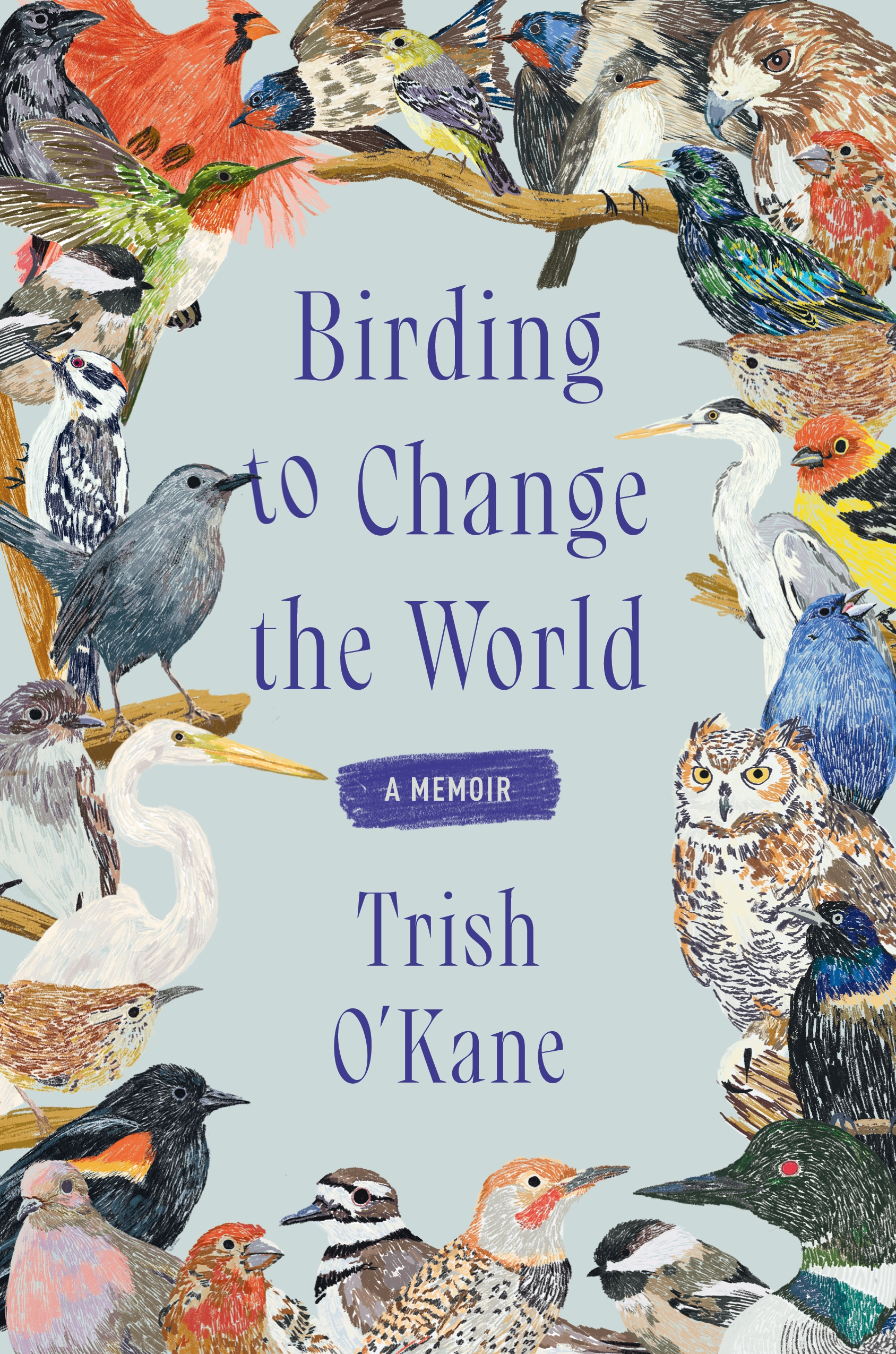
Trish O’Kane is a former war journalist, now a professor and activist (and author).
Yes, this book is about birds, but it’s about so much more. The main thing I took away from it is how to organise in your community to affect change, or protect something precious. And it talks about that in a very clever way, not preachy or “this is how you do it”, but by pointing out what is worth protecting first.
It starts with Trish noticing birds around her house. She gets interested in them, learns their behaviour, migratory routes, nesting places. Then she learns and observes how the birds’ environment is affected by new building projects, trash, or annual firework events. She starts getting involved in local projects and tries to change things to protect the wildlife. She introduces educational walks with kids, gets chatting with neighbours, finds likeminded people, forms a group of activists, collects information, sits in townhall meetings and working groups. A lot of the work involved is not glamorous, but tedious. But it shows realistic paths to really change things in the long term. A dedicated group of neighbours can create a small paradise for birds and insects.
That certain areas are off limits for new building projects, protected wetlands, or nature reserves, doesn’t just happen. Someone has to ask for it, fight for it, support it with scientific observations and explanations. And this someone is often a normal, but dedicated person. A person who sees something they love and wants to protect it.
When you want to make people care about something, you have to make them love that something first.
As written in this article The Science of what makes people care, you need to offer a solution to a problem people have to get them on board. It’s unclear how intentional Trish O’Kane thought about this strategy, but she employs it in clever ways. It’s never only about the birds. It’s about inequality and the people in the poor neighbourhoods losing their only access to nature. It’s about kids having access to afternoon activities that connect them with wildlife. It’s about flooding control. She also creates meaningful calls to action and gets people excited about joining the cause. She knows how to talk to the right people and figures out who has influence in the local council and why. How to get them on your side.
And she also employs pride as an emotion to get people. Researchers have found that people anticipating feeling pride in helping the environment were more likely to take positive action than those anticipating guilt for having failed to do so. This is exemplified in this book by making people pay attention to animals in their park and feeling pride that a rare species has been spotted.
But I did also learn a ton about birds in this book! It’s not just a metaphor for social action, O’Keane actually learns and knows a lot about birds and describes bird-related things in great detail. Which provided a good mix and lightened the activism parts with nature observation parts.